
Traditional Psychology: Insights as Old as Humanity
“It is possible to have great affection and regard for individuals and groups of people without in any way reducing one’s awareness of their currently poor capacity for understanding and preserving their heritage.
The present state of ignorance about distant and former cultures is not unique to this time. Unfortunately, though, the people of our time are not employing their superior resources to retrieve and develop the remnants of wider knowledge possessed elsewhere and also at other times.
This is because, while the tools and the general freedom are there for the first time, desire, resolution and breadth of vision are absent, also for the first time. The endowment is therefore at risk. For the first time.”
–Idries Shah, Reflections
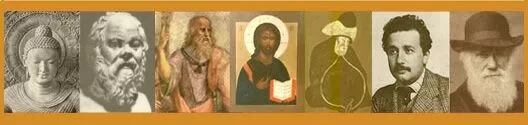
We think of psychology as a modern science, rooted in late nineteenth-/early twentieth-century work of Western scholars such as William James, Wilhelm Wundt, Ivan Pavlov, Charles Darwin, Sigmund Freud and Carl Jung. But the most important insights about human thought, behavior and motivation — including some of the “new” ideas put forward by these thinkers — are much older.
Recognizing the pitfalls in our automatic “default” mindset and the need to train more advanced capacities are not new themes in human history. We find them in myths and stories that recur in all times and cultures, in the core insights of the world’s great religions, in the writings of great thinkers such as Plato and Al Ghazzali.
In fact, the insights and methods we most urgently need to move beyond the limits of our error-prone nature and conditioning, to forge a conscious phase of human evolution, are available to us today, but outside the reach of scientific inquiry or modern psychological practices alone. As Jung himself wrote in Modern Man in Search of a Soul, “Psychoanalysis itself and the lines of thought to which it gives rise — surely a distinctly Western development — are only a beginner’s attempt compared to what is an immemorial art in the East.”
Though most often associated with the East, these “ways” are transmitted through all ages and cultures, as evidenced in the insights of the original prophet’s core teachings of the world’s great religions; in the world’s greatest poetry, literature, art and architecture; in universal myths, stories and traditions.
Uncovering these traditional psychologies, seeing how and where they intersect with modern research on the mind and brain, and finding ways to apply this important part of the human legacy to solving the most urgent needs of our contemporary culture, is a major focus of ISHK’s work.
Sufi Teaching-Stories
From the beginning of time, stories have filled a universal need for context and meaning. All cultures have their stories, many with universal themes, plots and imagery. Stories are fundamental to the psychological development of children. They help us shape our understanding of the world and make meaningful connections with each other. Stories give us a sense of shared history and destiny and help us see our common foibles and predicaments. They help us all confront our fears and formulate our hopes and aspirations.
The Sufis have been using carefully constructed stories for teaching purposes for thousands of years as a means of stimulating and stabilizing an expanded consciousness. Though on the surface these often appear to be little more than entertaining fairytales or folktales, they enshrine — in their characters, plots, and imagery — patterns and relationships that nurture a part of the mind not reachable in more conventional ways, thus increasing our understanding, flexibility, and breadth of vision.
Bringing this literary form into the mainstream of contemporary education and culture has also been an important focus of ISHK’s work.
The Teaching-Story:
Observations on the Folklore of our “Modern” Thought
by Idries Shah
Listen to a Reading by David Wade – 22:08
Download
Read Transcript
(Transcript Includes 3 Teaching Stories)
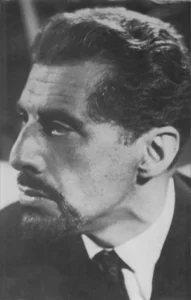
Idries Shah
Before his death in 1996, Idries Shah was established as the foremost authority on contemporary Sufi teaching and its relevance to the world today. His seminal book, The Sufis, is a remarkable presentation of this greatest of human legacies. He has published multiple collections of traditional Teaching Stories, representing centuries of Sufi thought aimed at developing human potential to its fullest form.
 Find it on
 Psychology Today interview
Psychologies East and West
In the mid-1970s, Shah joined the ISHK faculty for its Psychologies East and West symposia. Listen to his landmark lectures:
Download
Part 2 – 40:54Download
Part 2 – 40:46
Download